
 Search within the site


1
Overview
Within the Intellectual Property (IP) Division, we developed and deployed a suite of in-house artificial intelligence (AI) applications built on Microsoft Azure OpenAI for three user groups: research and development (R&D) departments, the IP Division, and domestic patent firms. These applications are used daily for tasks such as prior art patent searches, technology trend analysis, and patent specification drafting support, improving productivity. Users access the applications via the “IP Apps Portal” (Fig. 1) on the company intranet. Our policy is to foster a culture of “trying it out” and then transition step by step toward value creation. A representative application is “Smart AI Prior Art Search.” By entering an invention idea, a developer extracts prior patents and corresponding relevant paragraphs, and the generative AI compares and evaluates them to provide filing advice. Since company-wide release in March 2025, the application has been executed approximately 500 times per month and has reduced the workload required for prior art searches.
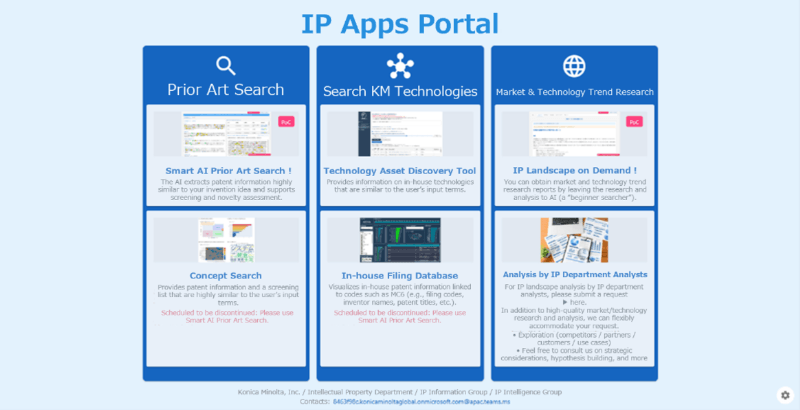
Fig. 1 IP Apps Portal GUI
2
Details
■Configuration
The AI utilization framework of the IP Division consists of three layers: (1) R&D departments, (2) the IP Division, and (3) domestic patent firms, providing functions tailored to user needs. AI applications for R&D departments are available company-wide via the “IP Apps Portal” on the intranet and improve efficiency of IP-related work in development. In the R&D-focused area, high-frequency tasks—prior art patent searches and technology trend surveys—are prioritized. The prior art search application “Smart AI Prior Art Search” and the information analysis application “IP Landscape on Demand” serve as core applications.
■Functions / Features / Applications
In “Smart AI Prior Art Search,” users enter an invention idea in natural language. The system extracts similar documents from published patent gazettes and identifies and lists the most relevant paragraphs. Generative AI then compares and evaluates the invention idea against prior documents and provides advice on improvements and filing considerations (Fig. 2).
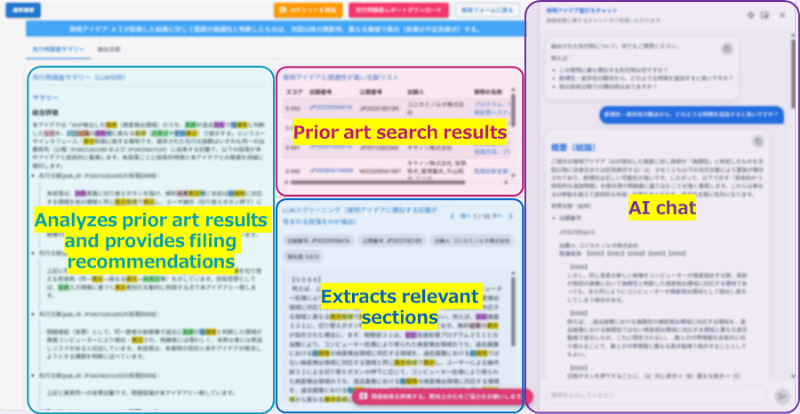
Fig. 2 Smart AI Prior Search App GUI
This process eliminates repeated query formulation and repeated manual review of prior documents, allowing users to quickly understand prior art while refining the invention idea. The architecture is a four-block web application consisting of
(1) Prior Art Search (document extraction),
(2) Screening Engine (relevant paragraph extraction and listing),
(3) Invention Evaluation Modules (comparative evaluation and advice by generative AI), and
(4) AI Chat (refinement of the invention idea).
The system is deployed and operated on an internal on-premises server (Fig. 3).
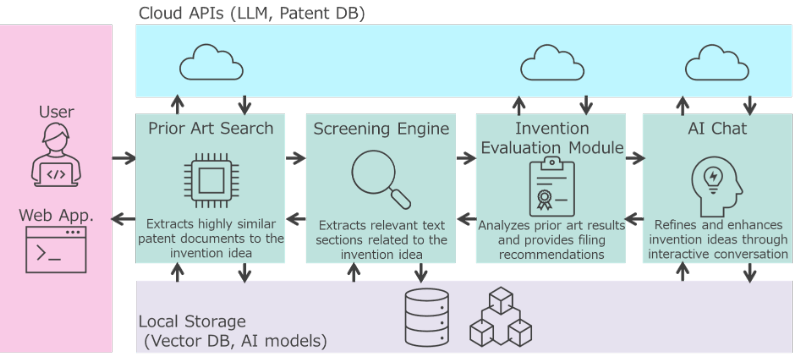
Fig. 3 Smart AI Prior Search App Block Diagram
■Future outlook
For “Smart AI Prior Art Search,” we will continue responding rapidly to new AI models and incorporate performance improvements while maintaining balance among accuracy, speed, and cost. We will also improve prior-document extraction accuracy by adopting new architectures. Furthermore, the IP Division plans to expand AI utilization beyond prior art searches to include clearance searches, continuous monitoring, and specification quality improvement across IP operations.