


1
Overview
In food packaging processes, food labeling and expiration dates are commonly printed on label stock using a thermal transfer ink ribbon, and the labels are then applied during packaging. However, the environmental burden associated with label materials and downtime caused by frequent ink-ribbon replacement have been challenges. To address these issues, Konica Minolta, in collaboration with FUJIPACK SYSTEM Co., Ltd. and MST Co., Ltd., developed an inkjet printing system capable of printing directly onto film on a food packaging machine (Fig. 1). Proprietary water-based inks and printing and drying technologies overcame issues related to film-substrate printability and ink fixation. In addition to textual information for food labeling, the system can directly print promotional messages such as “New” and logos. By reducing label materials and simplifying replacement work, the system reduces environmental impact and improves production efficiency1).
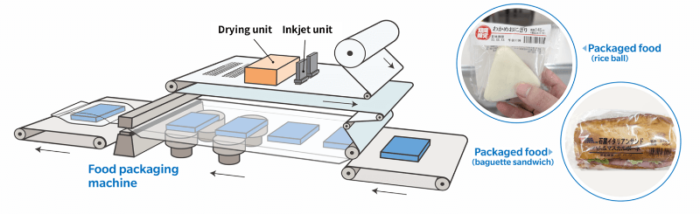
Fig. 1 Food packaging machine with integrated water-based inkjet printing system
2
Details
■Configuration
This section introduces the water-based inkjet printing system integrated into the compact horizontal pillow-packaging machine first unveiled at JAPANPACK 2025 (Fig. 2).
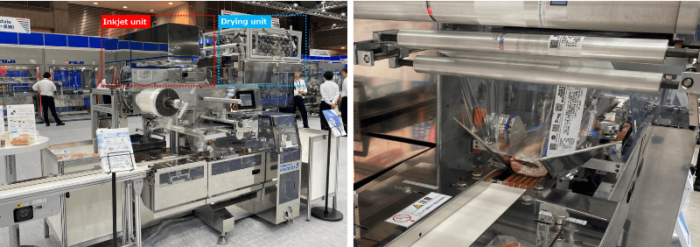
Fig. 2 Compact horizontal pillow-packaging machine with integrated water-based inkjet printing system (exhibited at JAPANPACK 2025)
The printing system consists of an inkjet unit and a drying unit. The inkjet unit prints variable information such as product names and food labeling on the packaging film as it is conveyed, and the drying unit then dries and fixes the ink. The printed film is subsequently formed into a shape that encloses the food, followed by heat sealing and cutting to complete individual packages (Fig. 3).
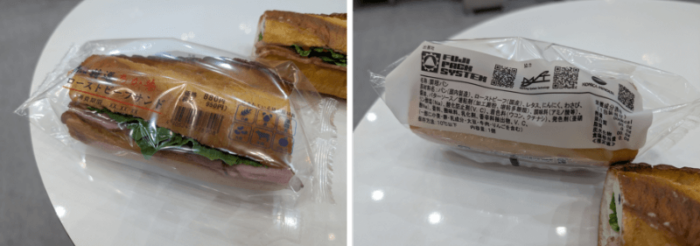
Fig. 3 Individually wrapped baguette sandwich with a water‑based inkjet‑printed wrapper
Through this process sequence, the system improves efficiency in food packaging processes that require recording variable information.
■Functions / Features / Applications
Konica Minolta’s water-based inkjet technology delivers high-quality printing on a wide range of substrates. The newly developed digital primer technology prints a primer immediately before the color inks, suppressing bleeding and repellency that would otherwise degrade image quality (Fig. 4).
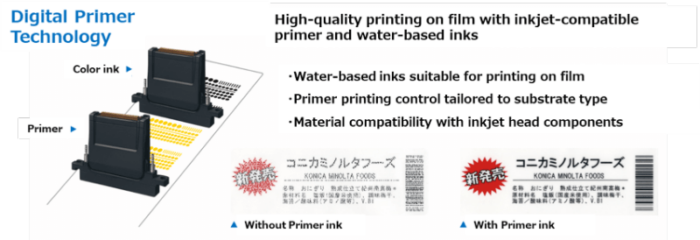
Fig. 4 Overview of digital primer technology
In addition, the resin design of the ink ensures strong adhesion to film substrates, and the printed ink film exhibits high oil resistance against oily substances such as mayonnaise (Fig. 5). These technologies facilitate printer downsizing and easier integration into packaging machines. The water-based inks are designed for food packaging applications; they are not subject to the Ordinance on Prevention of Organic Solvent Poisoning and comply with the positive-list system under Ministry of Health and Welfare Notification No. 370. This compliance ensures safety and enables confident use in food factories. The color lineup includes red, yellow, green, blue, and black. Direct printing of product names, promotional messages, logos, and other elements enhances shelf appeal and addresses diverse needs.
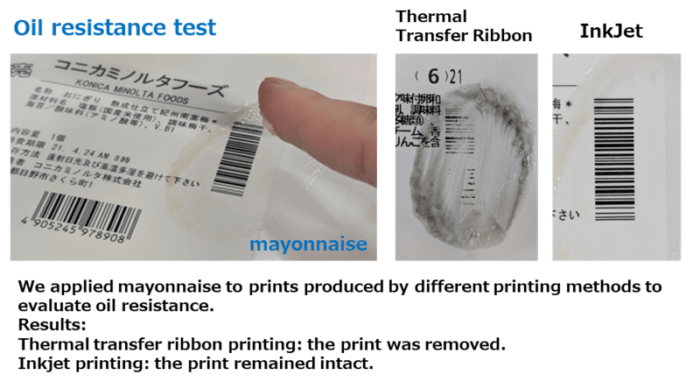
Fig. 5 Oil resistance of printed images: mayonnaise exposure test
■Future outlook
As a future direction, we will promote standardization of packaging film designs to improve efficiency and reduce costs in food packaging processes. For diverse product lineups, packaging materials with a unified base design will be adopted, and variable information will be printed using inkjet printing as needed. This approach simplifies inventory management of packaging materials and reduces disposal of excess stock. We will continue providing sustainable packaging solutions that meet customer needs while reducing environmental impact.